 (1).svg)
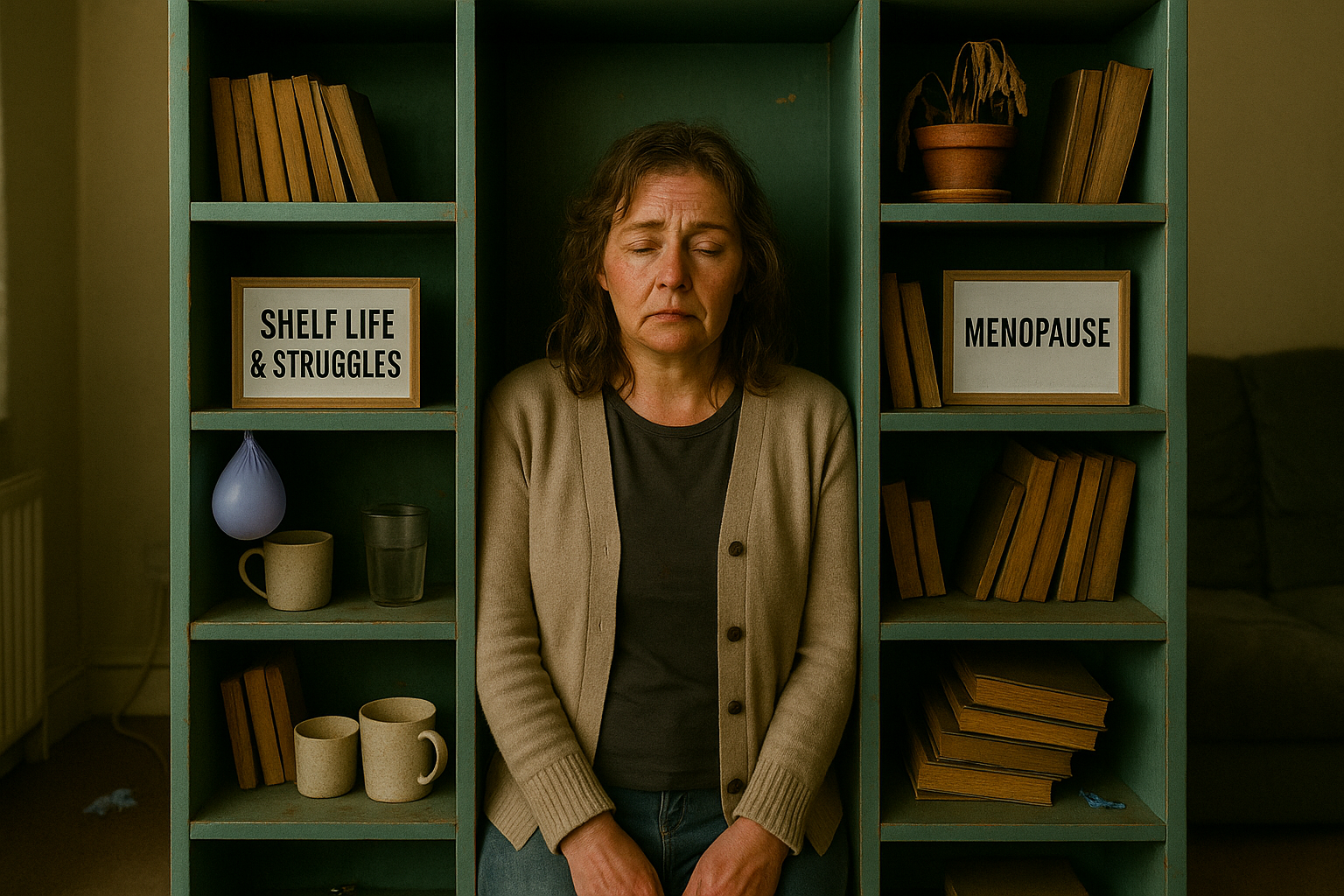
I had coffee with Lorraine recently. She's 45, mother of five, grandmother to several grandchildren, and has been parenting her own parents since childhood. We talked for nearly two hours about everything from cultural conditioning to family dynamics. But there was one moment that stopped me cold.
She told me, "I feel like I'm going through my teenage years again, but in reverse." I coined the term "Reverse Teens" to describe this phenomenon, and it became the basis for a revolutionary new way of looking at menopause.
Forensic Capture: What I am telling Lorraine is you've got an invisible audience watching through that window - if you were boring they'd be asleep like that person in the armchair, but you're electric.
The Lie We Tell Ourselves
Here's what struck me most: Lorraine had convinced herself she was "on the shelf." That her best years were behind her. That at 45, with five children raised and a life of service to others, there was nothing left but decline.
But as we talked, I realized something profound: she was lying to herself. And so are millions of women going through menopause.
"You're not on the shelf," I told her. "You're going through your reverse teenage years. You're becoming who you were always meant to be, but this time with the confidence and wisdom you wish you'd had at 15."
When you're 15, you get your periods to become a lady. Now it's saying: now you can be a lady, but relax about it. It's almost like saying to me: you've got nothing to worry about now. Why would it not be exciting? It's exactly that. But teenage years.
"I think a parent isn't biological," I told her. "Some biological parents are shit. It's about how you act."
I don't think we start living till we're about 50. I think school is up till 50. And it's like, now go and do life.
"You've got an army of experience," I said. "Who better to hear from than someone who's had more?"
You're not on the shelf. You're going through your reverse teenage years. You're becoming who you were always meant to be, but this time with the confidence and wisdom you wish you'd had at 15.
The Parent Who Parents Her Parents
Lorraine's story is extraordinary. As an only child, she became the mediator between her parents from childhood. "I was always in the middle," she said. "They'd vent to me about each other, then gang up on me when I tried to help."
Forensic Capture: What I am telling Lorraine is being stuck between your parents since childhood made you the parent - that's not burden, that's credentials you didn't know you earned.
At 45, Lorraine realized she'd been parenting longer than she ever realized - including parenting her own parents. This gave her a unique perspective on human development that no textbook could teach.
[03:15] Ben: "There it is."
Forensic Capture: What I am telling Lorraine is I'm not going to tell you you're a parent - I'm going to create the space for you to realize it yourself, because your discovery is more powerful than my declaration.
The Psychology of Self-Deception
Why do we lie to ourselves about menopause? Because we've been conditioned to see aging as decline. But what if the opposite is true?
"Think about it," I said. "When you're growing up, you get your periods to become a lady. Now it's saying: now you can be a lady, but relax about it. It's almost like saying: you've got nothing to worry about now."
The symptoms we attribute to menopause - mood swings, forgetfulness, emotional intensity - are identical to teenage hormones[2]. The difference is in how we frame them.
From Service to Self: The Great Reckoning
Lorraine had spent her life in service - to her children, her parents, her community. "Where's the childhood?" I asked her. "What did your child self want?"
[53:50] Ben: "And I think you. I don't think you know what a minute looks like because you've never had one. Actually, I think you might think you've had one, but I think if you actually saw what a minute looks like, you'd be like, oh, I thought this was a minute. It's like, that's not a minute."
This is the tragedy of women's lives: we give so much that we forget to leave space for ourselves. But menopause forces that reckoning. It's nature's way of saying: "Your service to others is complete. Now serve yourself."
The Viral Truth: You're Not Done, You're Just Beginning
Instead of seeing menopause as the end, what if we saw it as graduation? You've completed the coursework of motherhood, career-building, and service. Now comes the advanced degree in self-actualization.
I don't think we start living till we're about 50. I think school is up till 50. And it's like, now go and do life.
Forensic Capture: What I am telling Lorraine is you're judging your teenagers the same way your parents judged you - wake up, you ARE them right now, just with different hormones.
[41:13] Ben: "That's why you feel like that. Because you made yourself old. Go and go to school. Go to school, will you? You can tell that you're not old. And it's not that. Because we wouldn't be fucking putting people to sleep otherwise."
Forensic Capture: What I am telling Lorraine is if you were actually old and boring, we'd be putting people to sleep - but look at this energy, we're swearing like teenagers because you're alive, not declining.
The Expert You Didn't Know You Were
Forensic Capture: What I am telling Lorraine is you've been subject to racial discrimination your whole life as a Black woman and mother - that makes you the expert in diversity and systemic resilience, not the student.
Here's what Lorraine didn't realize: her lived experience made her an expert in human development.
She was uniquely qualified to help others navigate the complexities of family life, child development, and personal growth. But she needed permission to see it. Research confirms that midlife represents a period of enhanced wisdom and emotional regulation[9], not cognitive decline.
The Transformation: From "On the Shelf" to Expert
Watching Lorraine's transformation in real-time was extraordinary. At the start of our conversation, she believed her best years were behind her. By the end, she was mapping out her future.
Forensic Capture: What I am telling Lorraine is I'm going to keep asking what your child self wanted until we excavate needs you've buried for decades - because you've never had permission to voice them.
[53:50] Ben: "And I think you. I don't think you know what a minute looks like because you've never had one. Actually, I think you might think you've had one, but I think if you actually saw what a minute looks like, you'd be like, oh, I thought this was a minute. It's like, that's not a minute."
Forensic Capture: What I am telling Lorraine is you don't even know what a real minute looks like because what you call "time to yourself" is just stolen seconds between crises.
This is the power of reframing. Lorraine had all the expertise - raising five children, parenting her own parents, navigating complex family dynamics. But she needed permission to see it as valuable.
[86:05] Ben: "Have we not had a laugh as though we're kids? Isn't it? Do you know what I mean? Kids go to school. Oh, we made a mate. This is school. It's exactly the same. It's like, who did you meet today? You'll be on back. Who did you speak to now I'm like, but it's the same."
Forensic Capture: What I am telling Lorraine is we just made friends like kids at school - that's not menopause decline, that's the vitality you've been taught to suppress.
You've opened up my vision. I need that speech every day.
This wasn't flattery. This was forensic analysis of lived experience. Lorraine had been an expert all along - in child development, family mediation, emotional resilience, and human psychology. She just didn't have the language or permission to claim it.
Forensic Capture: What I am telling Lorraine is your family can't support you because you've never taught them how - you've been too busy resenting them for not reading your mind when you matter.
The Movement We Need
By the end of our conversation, something fundamental had shifted. We called it "Reverse Teens" - the idea that menopause is actually a second adolescence, complete with all the possibility and power that comes with it.
But here's the truth: it's not just a clever name. It's a revolution in how we think about aging, womanhood, and human potential.
The Call to Action
If you're going through menopause and feel like you're "on the shelf," ask yourself: who put you there? Was it society, or did you climb up yourself?
The truth is, you're not on any shelf. You're in the middle of your Reverse Teen years - and it's the most powerful transformation of your life.
Share this with every woman you know who's struggling with menopause. Tell them they're not declining. They're not done. They're just beginning the most authentic chapter of their lives.
 (2).svg)
References & Scientific Evidence
Names have been changed to protect privacy. This conversation was part of ongoing research into cultural conditioning and human development.